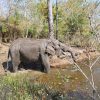


In the heart of Vietnam’s Central Highlands, in Dak Lak Province, a remarkable experience awaits travellers looking to discover nature in a more meaningful way.
Here, elephants no longer carry tourists on their backs or perform demonstrations for visitors. Instead, they move through their forest environment at their own pace, while travellers learn to observe them without disturbing their tranquillity.
Welcome to Yok Don National Park, one of Vietnam’s most remarkable protected natural areas and an increasingly important destination for a more responsible approach to elephant tourism.
Far removed from traditional animal attractions, this experience invites visitors to see these majestic animals differently, to appreciate their natural behaviours and to better understand the unique relationship they have shared with communities of the Central Highlands for generations.
Yok Don: A Natural Sanctuary in Vietnam’s Central Highlands
Located near Buon Ma Thuot, Yok Don National Park covers more than 115,000 hectares of forest landscapes close to the Cambodian border.
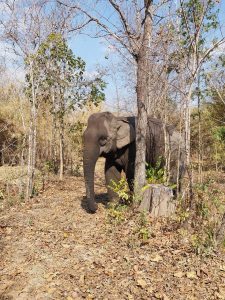
Unlike the dense tropical rainforests often associated with Vietnam, Yok Don protects an extensive area of dry dipterocarp forest, locally known as rừng khộp.
Some of the trees lose their leaves during the dry season, creating unusual landscapes where open woodland, sunlit clearings and denser vegetation alternate.
Sunlight filters through the tall branches, dry leaves rustle beneath your feet, and the sounds of the forest accompany every step.
It is within this distinctive environment that one of the park’s most memorable experiences takes place: the respectful observation of Asian elephants.
From Elephant Riding to Responsible Observation
For generations, elephants have played an important role in the culture and traditions of communities living in Vietnam’s Central Highlands.
Historically used for transportation and certain traditional activities, some domesticated elephants were later employed in tourism, particularly to carry visitors.
These practices could place repeated physical demands on the animals and restrict their ability to express natural behaviours.
Beginning in 2018, an initiative developed in partnership with the animal welfare organization Animals Asia helped transform elephant tourism in Yok Don National Park.
The objective was to replace elephant riding with observation-based experiences that place greater emphasis on animal welfare.
Elephants participating in this programme are no longer ridden by tourists. Instead, they have greater freedom to walk, search for food, explore the surrounding vegetation and rest.
This transition represents an important step towards a more responsible model of wildlife tourism in Vietnam.
Observing Elephants in Their Forest Environment Without Disturbing Them
The experience generally begins with an introduction to the national park and the elephants participating in the programme.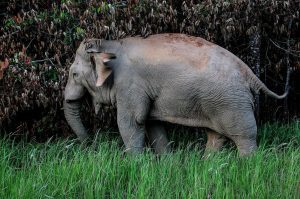
Accompanied by a local guide, visitors then follow forest trails towards the areas where the elephants are spending their time.
Unlike a conventional animal attraction, the encounter does not depend on forced interaction.
There is no riding, no asking elephants to pose for photographs and no expectation that they perform particular movements or activities.
The pleasure comes from observing their spontaneous behaviour.
An elephant may spend several minutes carefully selecting leaves with its trunk, pulling branches from nearby vegetation, exploring the ground or simply standing quietly in the shade of a tree.
These seemingly ordinary actions reveal the complexity and individuality of these remarkable mammals.
Visitors remain at an appropriate distance, determined by the guides and the people responsible for the elephants.
It is also important to understand that these are formerly domesticated or captive elephants that remain under the care and supervision of their handlers.
The experience should therefore not be confused with observing completely wild elephants in their natural habitat.
Rather, it is an opportunity to encounter elephants benefiting from living conditions that better respect their needs and natural behaviours.
An Experience Where the Elephants Set the Pace
One of the most meaningful aspects of this activity is that the elephants are not required to follow a programme designed around visitors.
They are free to move, feed or rest without having to respond to tourists’ expectations.
Some encounters take place in sunlit clearings, while others unfold among denser vegetation.
An elephant may remain in the same place for a considerable amount of time, quietly searching for food.
And this apparent simplicity is precisely what makes the experience so rewarding.
Observe rather than demand. Understand rather than touch.
This is the philosophy behind discovering elephants at Yok Don. During the excursion, the guide explains the feeding habits, sensory abilities and behaviours of Asian elephants, while also discussing the challenges facing the species.
Photography can naturally be part of the experience, but it should never take priority over the animals’ well-being. The most memorable moments are often those when visitors simply stand quietly and watch the elephants behave naturally.
Understanding Elephant Conservation in Vietnam
The Asian elephant holds a special place in Vietnamese history and traditions. In the Central Highlands, elephants were historically associated with certain economic activities, ceremonies and the prestige of local communities. Today, Vietnam’s remaining wild elephant populations are very small and face numerous threats.
Habitat fragmentation, human-elephant conflict and increasing pressure on forest ecosystems all threaten their long-term survival.
Protecting elephants therefore requires a comprehensive approach combining forest conservation, community awareness and changes in tourism practices.
The programme at Yok Don demonstrates how the relationship between tourists and elephants formerly used in tourism can evolve.
It shows that an encounter with an animal can be deeply memorable without requiring physical contact, performances or activities imposed for human entertainment..
Discovering the Remarkable Forests of Yok Don
Beyond elephant observation, Yok Don National Park protects an extraordinary natural environment.
Its dry dipterocarp forests form a relatively rare ecosystem in Vietnam, making the park particularly interesting for travellers passionate about biodiversity and natural landscapes.
The scenery changes noticeably throughout the year. During the driest months, foliage takes on golden and brown tones, while the forest floor becomes more open.
With the return of the rains, the vegetation gradually regains its lush green colours.
Guided walks offer opportunities to discover this natural diversity, observe birds and better understand the ecological characteristics of these distinctive forests.
The Srepok River, which flows through the region, adds another dimension to the landscape, with wooded riverbanks and rocky formations.
Yok Don is therefore much more than a destination for observing elephants. It is an exceptional natural area that deserves to be appreciated for its forests, wildlife and ecological heritage.
Elephants and the Traditions of Local Communities
In the Buon Don region, elephants occupy an important place in the collective memory of local communities.
The Ede and M’Nong ethnic communities have developed extensive knowledge of elephants and their environment over generations.
The historical relationship between people and elephants forms part of the cultural heritage of the Central Highlands, even as certain traditional practices have gradually evolved.
Today, responsible tourism initiatives can help reshape the roles of elephant handlers and local people who have worked closely with these animals for many years.
A visit to Yok Don can therefore be complemented by encounters with local communities, offering opportunities to learn more about their traditions, craftsmanship and relationship with the surrounding forests. These experiences provide a deeper understanding of the cultural landscape in which elephant conservation efforts are taking place.
How to Plan an Ethical Elephant Observation Experience at Yok Don
 Yok Don National Park is located near Buon Don, approximately one and a half hours by road from Buon Ma Thuot, depending on your departure point.
Elephant observation activities are generally organized as guided excursions lasting either half a day or a full day.
Advance booking is recommended, particularly to confirm the availability of guides and suitable activities.
For a comfortable visit, we suggest bringing: Comfortable walking shoes suitable for forest trails; Lightweight clothing that covers your arms and legs; Sun protection; Sufficient drinking water.
The dry season, generally from November to April, often provides favourable conditions for walking in the forest.
Whatever the season, however, elephant observation depends on the animals’ behaviour and the conditions on the day. Their freedom to behave naturally remains an essential part of the experience.
Yok Don: A Different Way to Experience Vietnam
Some travel experiences stay with us not because they are spectacular, but because of what they teach us.
At Yok Don National Park, watching an elephant walk peacefully through the forest, search for food or simply rest beneath a tree offers a different perspective on the relationship between people and animals.
This approach, based on observation and respect, adds a meaningful dimension to discovering Vietnam’s Central Highlands.
At Senteurs du Vietnam, we value travel experiences that encourage a deeper understanding of local environments, the preservation of natural heritage and authentic encounters.
Would you like to discover the elephants of Yok Don as part of a responsible journey through Vietnam? We can include this experience in a tailor-made itinerary through the Central Highlands, combining respectful elephant observation, beautiful natural landscapes and meaningful encounters with local communities.
Because travelling differently also means learning to admire nature without trying to control it.