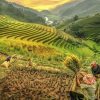


The North of Vietnam, around Sapa and Moc Chau is very famous for its terraced rice fields, however they are harvested only once a year. So to be able to admire the green landscapes of Sapa, go to the region between May and July and watch the harvests between August and September. However, be careful, the rice fields are not cultivated from November to April.
Regarding the region of Pu Luong and Mai Hich, this one differs from the North since there are two annual rice harvests, one in late May and the second in October. Moreover this region is known for its flora and its virgin forests as well as its rivers and waterfalls. So even when the rice fields are fallow from November to January, you can enjoy the wild nature of the area. A stay in North Vietnam, and especially in Sapa, offers visitors the unique opportunity to immerse themselves in these ancestral cultures. Travelers can:
- Participate in guided hikes through the rice terraces and traditional villages
- Spend a night at a homestay for dinner and overnight at a local family
- Visit the colorful markets where different ethnic groups meet and exchange
- Discover local crafts, including traditional weaving and dyeing
Sapa is just one example of the cultural richness that can be discovered during a tour in North Vietnam. Other regions like Ha Giang in the far north, or Mai Chau further south, also offer authentic encounters with other ethnic groups, each with its own unique traditions. Whether you opt for a 15 days tour in northern Vietnam or a shorter stay, The Sapa region and its surroundings promise you an unforgettable trip into the heart of the cultural and natural diversity of North Vietnam.