


Money in Vietnam: How to Pay, Exchange Currency and Withdraw Cash
You have just landed in Hanoi. A few minutes later, you order your first coffee and the bill comes to several tens of thousands of dong. That evening, restaurant dishes are priced at 150,000 or 200,000 VND. Then you stop at an ATM and are offered the option of withdrawing several million.
Your first encounter with money in Vietnam can be slightly confusing. There are zeros everywhere, and the familiar sense of value you have at home temporarily disappears.
Fortunately, it doesn’t take long to get used to the Vietnamese dong. Managing your money while travelling in Vietnam is actually quite straightforward once you understand when to use cash, when to pay by card, where to exchange foreign currency and how to withdraw money without accumulating unnecessary fees.
Your payment habits will also change throughout your journey.
A credit card may be perfectly convenient for paying for a beautiful hotel in Ho Chi Minh City, while cash becomes essential when enjoying a bowl of noodles at a family-run restaurant, buying fruit at a local market or stopping in a remote mountain village.
At Senteurs du Vietnam, we therefore recommend viewing cards and cash as complementary rather than choosing one over the other.
In this guide, we share our practical advice on how to pay in Vietnam, exchange money and withdraw cash, so that financial matters quickly become a minor detail and you can focus on enjoying your journey.
What Is the Currency in Vietnam?
Vietnam’s official currency is the Vietnamese dong, commonly abbreviated as VND. Its symbol is ₫.
It is the currency used throughout the country, from elegant hotels and restaurants in major cities to small shops and family-run businesses in provincial towns.
For international travellers, one of the most surprising aspects of the Vietnamese currency is the face value of its banknotes.
Paying tens or hundreds of thousands of dong for an everyday purchase is perfectly normal. Likewise, an ATM withdrawal can easily amount to several million VND.
These numbers can seem impressive during your first few hours in the country.
However, you will quickly become familiar with them. After a few meals, coffees and taxi rides, the most common amounts begin to feel natural, and you will gradually stop converting every purchase into your home currency.
We recommend spending a few minutes looking at the different banknotes when you first arrive. Familiarizing yourself with their colours and denominations makes those first transactions considerably easier.
Understanding Vietnamese Dong Banknotes
Vietnam uses several different banknote denominations.
Among those you will encounter most frequently are:
10,000 – 20,000 – 50,000 – 100,000 – 200,000 – 500,000 VND
Smaller denominations also exist and can be particularly useful for everyday purchases.
Large banknotes are convenient when withdrawing substantial amounts or paying larger bills, but smaller notes are invaluable during day-to-day travel.
At local markets, street-food stalls, small cafés and family-run businesses, paying with a banknote close to the actual amount makes transactions much easier.
One simple rule is particularly useful:
Always check the denomination before handing over a banknote.
When you are unfamiliar with Vietnamese currency, the number of zeros can make it surprisingly easy to confuse denominations, particularly when you are tired, in a busy market or paying in a dimly lit restaurant.
Taking two seconds to check your banknote is an excellent habit.
We also recommend avoiding a wallet filled exclusively with 500,000 VND notes. Whenever possible, use larger establishments to break bigger notes and keep a selection of smaller denominations for everyday expenses.
How Can You Quickly Convert Vietnamese Dong?
During the first few days of your trip, mentally converting prices into your home currency can help you understand how much things actually cost.
However, exchange rates fluctuate constantly.
Rather than memorizing a conversion formula several months before travelling, check the current exchange rate shortly before departure using a reliable financial source or your bank.
You can then remember a simple approximate conversion for everyday purchases.
Treat this mental calculation as a quick reference rather than an exact accounting method.
For larger expenses, card payments or significant currency exchanges, always check the actual exchange rate being applied as well as any additional fees.
After a few days, something interesting usually happens: you begin thinking directly in dong.
You instinctively know what a coffee, lunch or short journey should cost.
At that point, a currency that seemed slightly intimidating on your first day becomes simply another natural part of travelling in Vietnam.
Should You Bring Cash to Vietnam?
Bringing some foreign currency in cash can provide useful financial security, but there is generally no need to carry enough cash to cover your entire holiday.
ATMs are widely available in major cities and popular tourist destinations, while international cards are accepted by many hotels, restaurants and shops.
The best approach is therefore to combine several payment methods.
We recommend travelling with at least two independent options: your main bank card and, whenever possible, a second card stored separately.
A reasonable amount of cash can provide an additional emergency reserve.
Before departure, check your bank’s conditions for international card payments and cash withdrawals, including foreign transaction fees and withdrawal charges.
Can you pay directly with euros, Canadian dollars, US dollars or other foreign currencies in Vietnam?
For everyday purchases, you should not rely on this.
The Vietnamese dong is the country’s official currency and remains the standard for normal transactions. Even when a tourist-oriented business occasionally accepts foreign currency, the exchange rate offered may not be favourable.
Once in Vietnam, it is generally easier to think and pay in local currency.
How Much Cash Should You Carry?
 There is no single amount that suits every traveller.
Someone spending most of their holiday in Hanoi and Ho Chi Minh City, staying in comfortable hotels and dining in restaurants that accept cards, will have very different needs from someone travelling through mountain villages, local markets and remote rural regions.
Rather than arriving with a large amount of foreign currency, we favour a more flexible approach: keep a modest emergency reserve and obtain Vietnamese dong as needed throughout your journey.
Most importantly, never rely on a single payment method.
A card can be temporarily blocked, declined by a payment terminal or become unusable. An ATM may also be unavailable precisely when you need it.
Keeping a reasonable amount of Vietnamese dong, together with a backup payment method, provides valuable peace of mind.
This becomes especially important when leaving major urban areas.
If your itinerary takes you into the mountains, countryside or onto a remote island, anticipate your cash requirements before leaving the nearest major town.
How to Pay in Vietnam
The best payment method in Vietnam depends largely on where you are.
Imagine a typical day in Hanoi.
You leave your hotel in the morning and stop at a tiny neighbourhood coffee shop. Cash is the easiest way to pay.
At lunchtime, you choose a contemporary restaurant where your international card is readily accepted.
During the afternoon, you explore a traditional market where cash once again becomes far more convenient.
In the evening, you dine at an upscale restaurant where payment works much as it would in any major international city.
There is therefore no single “best” way to pay in Vietnam.
The most convenient approach is to carry some cash while using your bank card whenever it makes sense.
Paying in Cash: Still Essential in Vietnam
Despite the rapid growth of digital payments in Vietnam, cash remains extremely useful for international travellers.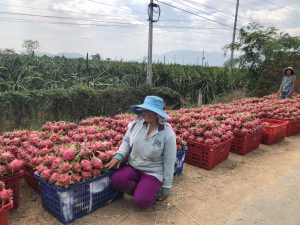
It is particularly convenient at traditional markets; family-run restaurants; small cafés; independent shops; street-food stalls; rural businesses; and for small everyday purchases.
Cash becomes even more important as you travel away from large cities and major tourist destinations.
Having a few banknotes in your wallet also makes spontaneous experiences much easier.
Stopping unexpectedly at a roadside café, buying fruit at a morning market, enjoying coffee overlooking rice terraces or tasting a speciality from a tiny local stall becomes effortless when you already have the appropriate currency.
Keep a selection of denominations rather than carrying only 500,000 VND notes.
For small purchases, 20,000, 50,000 and 100,000 VND banknotes are particularly practical.
There is no need to carry large amounts of cash with you throughout the day. Keep what you reasonably expect to spend and store the remainder securely.
Can You Pay by Credit or Debit Card in Vietnam?
Yes. Card payments in Vietnam have become common, particularly in large cities and established tourist destinations.
International cards are generally accepted at many: higher-end hotels; shopping centres; modern shops; international restaurants; upscale establishments; tourist-oriented businesses.
Visa and Mastercard are among the most widely recognized international card networks.
However, you should never assume that your card will work everywhere.
Cash can still be essential at local restaurants, markets, small businesses and in rural areas. Individual establishments may also have their own payment conditions or may not accept every type of card.
Before travelling, check your bank’s international fees.
A card that works abroad is not necessarily an inexpensive card to use abroad.
Your bank may charge a fee for every transaction, and additional costs may be incorporated into currency conversion.
Another important point concerns the currency displayed on the payment terminal.
If you are offered the choice between paying in your home currency or in Vietnamese dong, do not automatically select your home currency simply because the amount looks more familiar.
The conversion rate offered may be less favourable. Always check the conditions before confirming the transaction.
So, for a dinner in a nice establishment of Hanoi or a night in a charming hotel, the menu can be particularly comfortable. To buy some specialties at a Hué market or have lunch in a small country address, the dôngs are often the simplest companion.
What About QR Code Payments?
As you travel around Vietnam, you will notice QR codes almost everywhere—from fashionable cafés to surprisingly small local shops. Digital payments now play a major role in everyday Vietnamese life.
This can create the impression that cash is becoming unnecessary.
For international visitors, however, the situation is more complicated.
Many local QR payment systems are designed primarily for customers with compatible Vietnamese bank accounts or payment applications.
You should therefore not plan your trip assuming that every QR code you see will work with your foreign bank account or card.
The most reliable combination remains simple: an international bank card, a backup payment method and enough Vietnamese dong for everyday purchases. This gives you considerable freedom wherever your journey takes you.
Where Can You Exchange Foreign Currency in Vietnam?
If you arrive with foreign currency, you can exchange it for Vietnamese dong after entering the country.
Currency exchange is relatively straightforward in major cities and popular tourist destinations.
The important question is not simply where to exchange your money, but under what conditions.
Exchange rates fluctuate daily and may vary between providers.
Before exchanging a significant amount, check the approximate market rate. This gives you a useful reference when assessing the rate being offered.
When comparing exchange options, don’t focus exclusively on the advertised rate.
Ask how many Vietnamese dong you will actually receive after all commissions or fees have been taken into account.
The final amount is what really matters.
The condition of your foreign banknotes can also be important. Clean, undamaged notes are generally preferable when exchanging cash.
Once the transaction is complete, count your Vietnamese dong carefully before leaving and store your money discreetly.
Exchanging Money at the Airport
Après un long vol, pouvoir obtenir immédiatement de la monnaie locale est particulièrement confortable. Vous aurez peut-être besoin de dôngs pour une première dépense, un repas, un petit achat ou simplement pour disposer d’espèces dès le début du séjour.
After a long international flight, obtaining local currency immediately can be very convenient.
You may need cash for a first meal, a small purchase or simply want some Vietnamese dong available from the beginning of your journey. International airports therefore provide a convenient solution. However, convenience does not necessarily mean the exchange rate will always be the most attractive.
A simple strategy is to compare the airport rate with the indicative market rate for that day.
If the difference seems significant, exchange only enough for your initial expenses and change a larger amount once you reach the city.
There is little point spending excessive time searching for the absolute best rate to save a tiny amount of money.
Your time and convenience also have value.
For larger exchanges, however, comparing rates can certainly be worthwhile.
Banks and Currency Exchange Services
In Vietnam’s major cities, banks and authorized currency exchange providers are among the options to consider.
Your hotel may also be able to recommend a reliable nearby establishment.
Before handing over your money: check the current exchange rate; ask whether a commission applies; confirm exactly how many VND you will receive. These simple precautions prevent most misunderstandings.
Be cautious about informal offers that appear exceptionally attractive.
Saving a small amount is never worth sacrificing security or transparency.
At Senteurs du Vietnam, we follow a simple principle: when managing money abroad, reliability matters more than a marginally better exchange rate.
At Senteurs du Vietnam, we follow a simple principle: when managing money abroad, reliability matters more than a marginally better exchange rate.
How to Withdraw Cash in Vietnam
For many international travellers, ATMs are the easiest way to obtain Vietnamese currency progressively throughout a trip. Instead of carrying a large amount of foreign cash, you can simply withdraw Vietnamese dong as needed.
ATMs are relatively easy to find in major cities and popular tourist destinations, and many accept international bank cards.
However, three factors deserve particular attention: withdrawal limits, fees and currency conversion. These may vary depending on the Vietnamese bank, the ATM operator and, most importantly, the conditions attached to your own bank card.
Before departure, check: foreign ATM withdrawal charges; fixed transaction fees; percentage-based commissions;
foreign exchange conditions; daily and weekly withdrawal limits. A few minutes of preparation before travelling can save a considerable amount of money over a multi-week trip.
Are ATMs Easy to Find in Vietnam?
 In Hanoi, Ho Chi Minh City, Da Nang, Hue and other major tourist destinations, finding an ATM is generally straightforward.
The situation changes when travelling into rural areas, mountainous regions or remote destinations.
This is where planning becomes important.
Imagine leaving early in the morning for a remote valley. Your accommodation is already paid for and your driver is waiting. Later that day, you discover a local market, stop for lunch at a family-run restaurant and decide to buy a handmade souvenir. In this environment, you should never assume that an ATM or card terminal will be available.
Before travelling to an isolated area, withdraw enough Vietnamese dong in the last major town along your route.
Whenever possible, we also recommend using ATMs attached to banks or located in secure environments.
If your card is retained or a transaction fails, obtaining assistance may be easier.
What Are the ATM Fees in Vietnam?
ATM withdrawal costs can come from several sources.
The Vietnamese ATM operator may charge its own fee. Your bank or card provider may then add a fixed commission, a percentage of the amount withdrawn, or both. Finally, the exchange rate used between your home currency and VND can affect the total cost.
Because withdrawal limits and charges may change, avoid relying on figures found months earlier on a travel forum or old blog post.
Instead, read the information displayed by the ATM before confirming your transaction and check your card provider’s latest conditions before travelling.
If your bank charges a fixed fee for each withdrawal, making numerous small withdrawals can become expensive.
In that situation, fewer withdrawals of reasonably larger amounts may be more economical—without carrying unnecessarily large quantities of cash.
Beware of Dynamic Currency Conversion
This is one detail worth understanding before paying or withdrawing money in Vietnam.
Some ATMs and payment terminals may offer to process the transaction directly in your home currency. This can seem reassuring because the amount is immediately familiar. However, the convenience may come with a less favourable exchange rate.
This process is known as Dynamic Currency Conversion (DCC). When you accept DCC, the conversion is performed according to the rate offered for that particular transaction rather than the normal conversion arrangements of your card network or issuing bank.
When given a choice, paying or withdrawing in the local currency (VND) often allows your card network or bank to perform the conversion according to the conditions attached to your card. This does not guarantee a fee-free transaction—your own bank may still charge international fees.
The important habit is simply to read the screen carefully before confirming.
Don’t automatically choose your home currency just because the amount is easier to understand.
How to Avoid Unnecessary Banking Fees in Vietnam
Managing your money efficiently begins before you leave home.
A few days before departure, check your bank’s conditions for international transactions.
Pay particular attention to: international payment fees; ATM withdrawal charges; foreign exchange margins; daily or weekly payment limits; withdrawal limits. Fees can accumulate quickly.
A single ATM transaction may include a charge from the local ATM operator as well as another from your own bank.
To reduce unnecessary costs:
- check your card’s fees before departure;
- favour ATMs operated by established banks;
- read all fees displayed before confirming;
- avoid unnecessarily frequent small withdrawals;
- carefully review any offer to convert the transaction into your home currency.
There is no single bank card that is universally best for travelling in Vietnam. Financial products and conditions change regularly.
The most effective approach is therefore to compare your own card’s features with the way you expect to travel.
Our Advice for Managing Your Money with Peace of Mind
Managing money in Vietnam isn’t only about finding a good exchange rate. It is also about organizing your payment methods so that a small inconvenience never disrupts your journey.
Avoid keeping all your cash and bank cards in the same place. Carry only the amount you need for the day and store your reserve securely. If you travel with two cards, keep them separately. Your second card should remain a genuine backup if the first is lost, blocked or temporarily unusable.
This is particularly important on a multi-destination journey. Payment options will not always be the same in Hanoi, the northern mountains, Hue, Hoi An, the Mekong Delta or remote coastal areas. In a large city, finding an ATM may take only a few minutes. In a small rural village, it may become an unnecessary complication.
The goal isn’t to spend your holiday worrying about money.
Quite the opposite. A few simple precautions make financial matters almost invisible.
Travelling to Rural Areas? Prepare Your Cash in Advance
Vietnam reveals some of its most authentic character when you leave the main tourist routes behind.
A winding mountain road; A colourful morning market; Lunch in a family home; A tiny café overlooking endless rice terraces.
In these environments, cash remains extremely useful.
Before spending several days in a remote area, estimate the expenses you are likely to pay directly, such as meals, drinks, small purchases, transportation and personal expenses. Withdraw enough Vietnamese dong before leaving a town with a good selection of ATMs.
At the same time, avoid carrying unnecessarily large amounts.
The right balance is to have enough for the next stage of your journey while keeping your money sensibly distributed.
Which Payment Method Should You Use?
After a few days in Vietnam, choosing between cash and card becomes instinctive. Until then, these simple guidelines can help.
For a comfortable hotel, upscale restaurant, shopping centre or modern boutique, paying by card is often convenient when accepted and when your card offers reasonable international fees.
At a market, family-run restaurant, independent café or for small purchases, Vietnamese dong will usually be the easiest option.
Before an excursion into a rural or mountainous area, prepare enough cash in advance. Never organize a remote trip assuming that a functioning ATM or card terminal will be available exactly when you need one.
For a large purchase or payment, take a few extra seconds to check the amount, selected currency and any fees before confirming.
Ultimately, the best way to pay in Vietnam is neither exclusively by card nor exclusively in cash.
It is having the flexibility to use whichever option is most appropriate for the situation.
Money in Vietnam: What You Need to Remember
Seeing several million Vietnamese dong displayed on an ATM screen can feel slightly intimidating on your first day.
Fortunately, it usually takes only a few hours to become familiar with the currency. You learn to recognize the banknotes, keep smaller denominations available and gradually understand everyday prices without constantly converting every coffee or meal into your home currency.
For a comfortable journey, we recommend a simple combination: Vietnamese dong for everyday expenses, an international bank card with suitable overseas conditions and, ideally, a second payment method stored separately.
Before departure, check your card’s fees and limits. Once in Vietnam, compare rates before exchanging significant amounts, carefully read ATM information and anticipate your cash needs whenever your itinerary takes you away from major cities.
These simple precautions allow you to focus on what truly matters.
A journey through Vietnam will be remembered for the atmosphere of an early-morning market, a spectacular road through the mountains, an unexpected encounter or a memorable dinner—not for the mechanics of an ATM withdrawal.
Planning Your Trip to Vietnam?
At Senteurs du Vietnam, we design tailor-made journeys around your pace, interests and personal way of discovering the country. Entrust us with your travel plans, and our local team will assist you with both the practical details and the unforgettable experiences that will make your journey truly unique.