

What to do in Sapa? The most beautiful experiences to live in the heart of the Vietnamese mountains
In the majestic mountains of northern Vietnam, Sapa reveals an almost unreal setting where valleys covered with terraced rice fields meet clouds and misty peaks. Here, each trail tells a story, each village reveals an ancestral culture and each encounter leaves a deeply human imprint.
Long considered a confidential destination, Sapa now attracts travelers in search of authenticity, spectacular nature and immersive experiences far from the classic circuits. Yet, despite its growing popularity, this mountainous region retains a fascinating soul. The vibrant ethnic markets, hikes through the green valleys and nights at home still allow to discover a deeply sincere Vietnam.
Visiting Sapa is not just about admiring beautiful landscapes. It is taking the time to walk in the rice fields carved on the mountainside, share a meal with a Hmong family, observe the morning mists enveloping the valleys and feel this unique atmosphere that makes this region one of the most captivating jewels of the country.
So, what to do in Sapa to live a truly memorable experience? Between trek in the ethnic villages, ascent of Fansipan, discovery of traditional markets and cultural immersion, we share with you the essential experiences to discover Sapa differently.
Why visit Sapa during a trip to Vietnam?
An iconic destination in northern Vietnam
Perched at an altitude of about 1,500 meters in the province of Lao Cai, Sapa is one of Vietnam’s most iconic destinations. This small mountain town immediately charms with its peaceful atmosphere, cooler climate and absolutely grandiose landscapes.
Unlike major Vietnamese cities such as Hanoi or Ho Chi Minh City, Sapa offers a much slower pace. Here, travelers come above all to breathe, contemplate and reconnect with a still preserved nature.
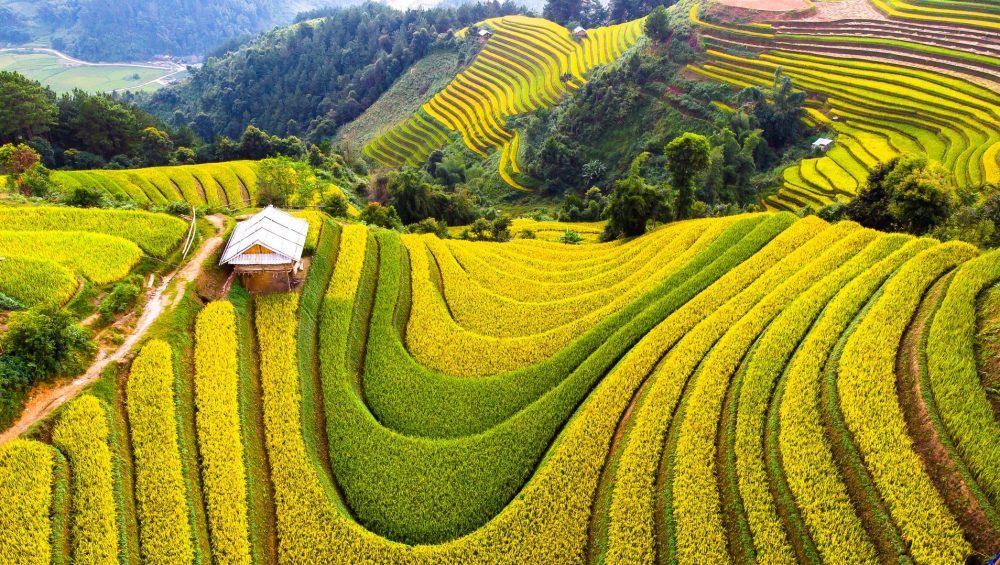
What makes Sapa so spectacular is above all its famous terraced rice fields. Carved for generations by local communities, they draw harmonious curves along the mountains and transform the valleys into true natural works of art.
Depending on the season, the landscapes completely change their atmosphere. In spring, young shoots cover the hills with a bright green. During the summer, the rice fields become lush under the tropical rains. Then, in the fall, they take absolutely sublime golden hues before the harvest.
This diversity of landscapes makes Sapa a fascinating destination to discover throughout the year.
A unique immersion in ethnic cultures
 Beyond its landscapes, Sapa also seduces by its exceptional cultural richness. Several ethnic minorities have lived in the mountains around the city for centuries: the black Hmong, the red Dao, the Tay and the Giay.
Each community has its own traditions, traditional clothing, artisanal know-how and ancestral customs. This cultural diversity brings a unique depth to the journey.
In remote villages, the scenes of daily life sometimes seem out of time. Women still weave fabrics by hand, buffaloes cross the rice fields at sunrise and children play along the mountain paths.
These human encounters are often the most striking memories of a stay in Sapa. Unlike some very tourist destinations in Asia, here it is possible to experience sincere and deeply enriching exchanges.
Explore the beautiful terraced rice fields of Sapa
The valley of Muong Hoa, natural jewel of the region
You can’t visit Sapa without exploring the Muong Hoa valley. A true symbol of North Vietnam, this valley is home to some of the country’s most spectacular landscapes.
From the first few kilometers, the scenery becomes absolutely striking. The mountains plunge into deep valleys while the rice fields hug the reliefs with an almost artistic precision.
At sunrise, the morning mists gently envelop the hills and create a mysterious and poetic atmosphere. The lights constantly change throughout the day, giving the landscapes an almost unreal dimension.
The villages of Lao Chai, Ta Van and Y Linh Ho allow to explore this region in ideal conditions. The trails run through rice fields, along traditional houses and offer absolutely breathtaking views.
For photography lovers, the Muong Hoa valley represents an exceptional terrain. Each season transforms the landscapes and reveals a new facet of Sapa.
What is the best time to admire the rice fields?
The beauty of Sapa’s rice paddies changes considerably with the seasons.
From May to June: the season of reflections
After the first rains, the rice fields are filled with water before planting. The terraces then become gigantic mirrors reflecting the sky and the mountains.
This period offers bright and particularly photogenic landscapes.
July to August: intensely green mountains
During the summer, the rice fields reach their full growth. The valleys become incredibly green and lush.
Even if a few showers may occur, this season remains magnificent for nature lovers.
From September to the beginning of October: the golden season
This is undoubtedly the most spectacular period. Just before the harvest, the rice fields take on absolutely sumptuous golden hues.
The landscapes then become incredibly photogenic and attract travelers from around the world.
From November to March: a misty and mysterious atmosphere
During the winter, temperatures drop and the mountains are often covered in mist. The atmosphere becomes calmer, more intimate and deeply immersive.
Make an unforgettable trek in Sapa
Why trekking is the essential experience in Sapa
The trek is undoubtedly the best way to discover Sapa. Walking through the mountains allows you to move away from the main roads and explore totally unspoiled landscapes.
Along the trails, the panoramas are constantly changing. The valleys suddenly open onto vertiginous rice fields, buffaloes cross paths and villages appear at the bend of the hills.
This slow immersion also allows a better understanding of the daily life of local communities.
In Sapa, the trek is not only a sporting activity, it is a deeply human and sensory experience.
The most beautiful hikes around Sapa
The Lao Chai trek – Ta Van
This is the most famous route in the region, and for good reason. This hike passes through some of the most beautiful landscapes in the Muong Hoa valley.
The views of the terraced rice fields are absolutely spectacular.
The village of Ta Van also allows you to discover the culture of the Giay ethnic groups in a peaceful and authentic setting.
Y Linh Ho, a more confidential valley
Less frequented than some classic routes, the village of Y Linh Ho appeals to travelers seeking more tranquility.
The trails wind between the mountains and offer a more intimate immersion in the landscapes of Sapa.
Ban Ho, for a deeper immersion
Further away from tourist routes, Ban Ho offers a much more authentic experience.
Travelers who take the time to spend a night there discover a peaceful environment surrounded by mountains and rice fields.
Easy or sporty trek: which route to choose?
Sapa offers hikes suitable for all profiles.
Travelers wanting an accessible experience can opt for short walks around nearby villages.
More athletic trekking enthusiasts will be able to choose longer routes through several valleys and remote villages.
We generally recommend:
- 1 day for a light discovery,
- 2 days for complete immersion,
- 3 days or more for travelers who are passionate about hiking.
With more time, the experience becomes much more immersive and allows you to discover less frequented areas.
 Why go with a local guide?
 Why go with a local guide?
Using a local guide really transforms the experience.
Beyond the landscapes, the guide shares the traditions of ethnic minorities, explains the history of the villages and facilitates exchanges with the inhabitants.
This approach also allows you to leave the traditional tourist paths and explore much more authentic places.
At Senteurs du Vietnam, we favor human and responsible experiences by collaborating with local guides deeply attached to their region.
Climb to the summit of Fansipan, the roof of Indochina
A mythical mountain in northern Vietnam
With its 3,143 meters of altitude, Mount Fansipan is the highest peak in Vietnam and all of Indochina.
Overlooking the northern mountains, it fascinates travelers in search of grandiose landscapes and adventure.
On a clear day, the views from the top are simply sensational. The valleys seem endless and clouds sometimes float under the feet of visitors.
The atmosphere is spectacular, almost unreal.
Cable car or hiking: which experience to choose?
The cable car
The Fansipan cable car allows you to quickly reach the heights while enjoying exceptional views of the mountains.
Accessible to all, it represents an excellent option for travelers wishing to admire the panoramas without significant physical effort.
the ascent on foot
For trekking and adventure lovers, climbing the Fansipan is a much more intense experience.
The route crosses tropical forests, mountainous areas and particularly impressive wild landscapes.
Even if the effort is substantial, reaching the summit on foot provides an extremely rewarding feeling.
Discover the traditional markets of Sapa
A fascinating immersion in local life
Ethnic markets are among the most captivating cultural experiences to experience in northern Vietnam.
Every week, the inhabitants of the villages gather in a vibrant and colorful atmosphere to sell their products, buy goods or simply meet up.
These markets offer an absolutely fascinating spectacle. Colorful traditional clothing, spice stalls, embroidered fabrics and scenes of daily life create a deeply authentic atmosphere.
The most beautiful markets around Sapa
Bac Ha market
Probably the most famous in the region, the market of Bac Ha attracts many ethnic minorities from the surrounding mountains.
Its dynamic atmosphere and vibrant colors make it an unmissable experience.
Can Cau market
Smaller and less crowded, Can Cau offers a more authentic experience.
The market is particularly renowned for its traditional textiles and local life scenes.
Muong Hum market
Still relatively untouched by mass tourism, Muong Hum appeals to travelers seeking a more private experience.
What can you buy in the local markets?
The markets of Sapa are full of artisanal products:
- hand-embroidered fabrics,
- traditional clothes,
- handcrafted bags,
- silver jewelry,
- local spices,
- agricultural products.
It is also the ideal opportunity to discover some typical culinary specialties of northern Vietnam.
Staying with locals for an authentic experience
Why choose a homestay in Sapa?
Spending a night at a local’s house is one of the most enriching experiences to live in Sapa.
In remote villages, homestays allow you to discover the daily life of local families in a deeply authentic setting.
In the evening, after a day of hiking, sharing a traditional dinner around a fire often becomes a particularly memorable moment.
Far from standardized hotels, this human immersion brings a much stronger emotional dimension to the trip.
A peaceful atmosphere in the heart of the mountains
In the early morning, the landscapes of Sapa reveal all their beauty.
The first lights gently illuminate the rice fields while the mist still floats above the valleys. The sounds of the mountain gradually replace the silence of the night.
This serene atmosphere is one of the most precious memories that travelers bring back from Sapa.
Our tips for a great homestay experience
To make the most of a homestay in Sapa, we recommend:
- to prioritize family establishments,
- to accept comfort that is sometimes simpler,
- to respect local traditions,
- to take the time to interact with the residents,
- to live the experience with curiosity and openness.
This approach makes it possible to create much more sincere and memorable encounters.
What to do in Sapa in 2 or 3 days? Our itinerary ideas
2-day itinerary in Sapa
Day 1: trek in the valley of Muong Hoa
After your arrival in Sapa, go directly to explore the surrounding valleys.
The trek between Lao Chai and Ta Van offers an excellent introduction to the spectacular landscapes of the region.
At the end of the day, enjoy a night in a homestay for an immersive experience in the heart of the mountains.
Day 2: Fansipan and discovery of the city center
The next day, climb to the top of Fansipan to admire the magnificent views of the mountains of northern Vietnam.
You will then discover the local market, the church of Sapa and the small busy streets of the city center.
3-day itinerary in Sapa
With an extra day, the trip becomes much more comfortable and immersive.
You will be able to explore less frequented villages, take more time for hikes and enjoy the landscapes more calmly.
This formula also allows to live a deeper cultural experience through meetings with local communities.
Practical tips to organize your trip to Sapa
When to go to Sapa?
The best times to visit Sapa are usually:
- from March to May,
- from September to November.
During these seasons, the temperatures remain pleasant and the landscapes particularly beautiful.
However, autumn remains the most spectacular period thanks to the golden rice fields.
How to reach Sapa from Hanoi?
There are several options to reach Sapa from Hanoi.
Night train
Very popular, it allows you to travel comfortably to Lao Cai before joining Sapa by car.
Premium cabins offer a pleasant experience for long journeys.
The comfortable bus
Faster and often more economical, the bus remains a practical option.
Some companies now offer particularly comfortable bunk seats.
Private car
For more flexibility and comfort, the private car with driver remains the most premium solution.
It also allows for scenic stops along the way.
Where to stay in Sapa?
Luxury hotels with panoramic views
Sapa now offers magnificent high-end establishments offering sensational views of the mountains.
These hotels appeal to travelers seeking comfort, spa and elegant atmosphere.
Homestays in the villages
For a more authentic immersion, homestays remain an exceptional experience.
Hotels in the city center
Practical for exploring the surroundings easily, they are perfect for short stays.
Conclusion
Sapa is undoubtedly one of the most fascinating destinations in Vietnam. Between the majestic mountains, the spectacular terraced rice fields and the profoundly authentic human encounters, every day spent in this region leaves unforgettable memories.
Whether you want to trek through the valleys, discover ethnic markets, sleep at home or admire the views from the top of Fansipan, Sapa offers a unique immersive experience in the heart of northern Vietnam.
At Senteurs du Vietnam, we create tailor-made trips to discover Sapa in an elegant, authentic and deeply human way.
Thanks to our local expertise, we accompany you to live the most beautiful experiences far from standardized tourism and enjoy the magic of the Vietnamese mountains.