

Trip to Vietnam and Siem Reap:
There are trips that seduce with the beauty of their landscapes. Others leave a lasting impression through the intensity of emotions, human encounters and the rare sensation of crossing several universes in a single itinerary. The trip Vietnam and Siem Reap undoubtedly belongs to this category of deeply unforgettable discoveries.
Combining the vibrant energy of Vietnam with the majesty of the temples of Angkor allows to live a particularly balanced experience between cultural immersion, refinement of travel and permanent wonder. Few tours in Southeast Asia offer such a richness of contrasts in the same adventure.
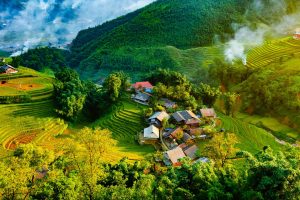
Vietnam immediately captivates with its spectacular diversity. To the north, the bustling alleys of Hanoi reveal a fascinating local life where scooters, street markets and traditional cafes compose an intensely lively atmosphere. Further on, misty mountains and terraced rice fields create landscapes that are almost unreal. In the center of the country, Hoi An lights up the evenings with its colorful lanterns while the coastal villages invite to slow down. Then come the peaceful waters of the Mekong Delta, where floating scenes of life offer an authentic immersion in rural Vietnam.
Each stage transforms the journey. Each region has its own identity, rhythm and emotions. It is precisely this diversity that makes the trip to Vietnam Angkor so captivating.
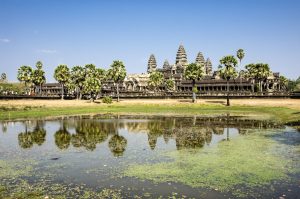
Then the setting gradually changes as we approach Siem Reap. The atmosphere becomes softer, quieter, almost spiritual. The days begin at dawn, when the first lights slowly reveal the mythical silhouettes of Angkor Wat behind the ancient palm trees and stones. The contrast with the Vietnamese effervescence creates a particularly powerful emotion.
Discovering the temples of Angkor after crossing Vietnam gives a unique depth to the journey. The sculpted faces of Bayon, the monumental roots of Ta Prohm or the infinite galleries of Angkor Wat seem to tell a different facet of Southeast Asia: more contemplative, more mystical, more timeless.
This combined Vietnam Cambodia also seduces by its great fluidity. Air connections between Hanoi, Da Nang or Ho Chi Minh City and Siem Reap greatly facilitate the organization of the tour. It thus becomes possible to build an elegant, comfortable and perfectly balanced route without multiplying the tiring journeys.
In this article, we share our vision of a truly harmonious Vietnam and Siem Reap trip. You will discover which regions to focus on, how many days to plan, what experiences to absolutely live and how to create an immersive itinerary between Vietnamese authenticity and discovery of the temples of Angkor.
Why combine Vietnam and Siem Reap in the same trip?
Two deeply complementary atmospheres
 The success of the Vietnam and Siem Reap trip does not rely solely on the geographical proximity between the two destinations. This combination is especially attractive for the remarkable balance it creates between immersion, emotion and cultural discovery.
Vietnam immediately fascinates with its energy. Everything seems alive, moving, vibrant. In Hanoi, the streets come alive from the early hours of the morning around small cafes, improvised markets and scooters that cross the city in a perfectly messy ballet. This permanent vitality gives the journey a particularly captivating intensity.
Throughout the itinerary, the country reveals very different faces. The northern mountains plunge travelers into a more peaceful atmosphere, between terraced rice fields and traditional villages. Central Vietnam invites you to slow down with its historic cities, colorful lanterns and elegant beaches. Further south, the Mekong Delta offers a deeply human immersion in the rhythm of floating markets and life on the water.
Then comes Siem Reap, as a natural transition to another dimension of travel.
The atmosphere suddenly becomes more serene. The pace slows down. The days take on a more contemplative tone. This gradual evolution makes the arrival at the temples of Angkor even more striking.
Discovering Angkor Wat after crossing Vietnam often provokes an emotion that is hard to describe. The carved stones, the mysterious faces of the Bayon and the gigantic roots of Ta Prohm seem to suspend time. Many travelers tell us that they feel a kind of appeasement in Siem Reap after the Vietnamese intensity.
C’est précisément ce contraste qui rend le voyage Vietnam Angkor aussi fascinant : deux cultures différentes, deux rythmes distincts, mais une parfaite harmonie dans l’expérience globale.
An exceptional cultural immersion in Southeast Asia
 Combining Vietnam and Cambodia also allows you to discover two major civilizations of Southeast Asia during the same trip.
In Vietnam, immersion comes first through daily life. The country is discovered as much through its landscapes as in the simple scenes of everyday life: sharing a pho in a small local shop, watching fishermen on the rivers of central Vietnam or crossing the colorful markets of the Mekong at dawn.
Vietnamese gastronomy also plays an essential role in this immersion. Each region has its own specialties, flavors and culinary traditions. This diversity gives travel a particularly rich sensory dimension.
Cambodia offers a different but complementary approach. In Siem Reap, the heritage becomes monumental. The temples of Angkor tell the grandeur of the former Khmer Empire through a spectacular and deeply symbolic architecture.
Visiting Angkor Wat at dawn, when the first lights slowly illuminate the temple’s towers, remains an almost unreal experience. Further on, the Bayon fascinates with its huge sculpted faces while Ta Prohm unveils a striking setting where nature seems to take possession of the ancient stones.
This alternation between local Vietnamese immersion and discovery of the Khmer heritage creates a particularly complete journey, both cultural, emotional and deeply inspiring.
A smooth and easy to organize itinerary
Contrary to some conventional wisdom, organizing a Vietnam-Cambodia tour is particularly simple today.
The air connections between Vietnam and Siem Reap are numerous and fast. It is possible to easily reach Cambodia from:
- Hanoi
- Da Nang
- Ho Chi Minh City
This fluidity makes it possible to build a comfortable route without multiplying the tiring days of transport.
Most travelers choose to explore Vietnam from north to south before finishing the trip in Siem Reap. This logic works particularly well on the emotional level: the journey begins in the Vietnamese energy before ending in the majestic and soothing atmosphere of the temples of Angkor.
The Vietnam Cambodia combined also adapts to different travel rhythms. Some prefer a dynamic two-week tour focused on the essentials, while others choose a more immersive three-week approach to fully enjoy local encounters and experiences off the beaten track.
This flexibility is one of the great assets of travel Vietnam and Siem Reap. It can be conceived both as a first discovery of Southeast Asia and as a deeply immersive high-end cultural experience.
Which itinerary should you choose for a trip to Vietnam and Angkor?
Hanoi and northern Vietnam: authenticity and grandiose landscapes
 To start a trip Vietnam and Siem Reap in an immersive way, the north of Vietnam is often the ideal introduction. This region reveals a fascinating balance between cultural heritage, spectacular landscapes and deeply authentic scenes of life.
Hanoi immediately captivates with its unique atmosphere. The Vietnamese capital has a particular elegance where ancient traditions and modern energy coexist permanently. From the early hours of the morning, the sidewalks come alive around pho soup vendors, small Vietnamese cafes and popular markets installed at the corner of the streets.
The old quarter remains one of the highlights of a trip to Vietnam. Its narrow streets, colonial facades and constant agitation plunge travelers into an immediate immersion. Yet, behind this effervescence, Hanoi retains an astonishing sweetness around its peaceful lakes, ancient temples and shaded gardens.
From the capital, several unmissable stops allow you to discover the richness of northern Vietnam.
Halong Bay remains one of the country’s most iconic experiences. Navigating between the karst formations emerging from the emerald waters creates an almost unreal atmosphere. A cruise of one or two nights allows you to fully enjoy the changing lights of the bay, far from too fast excursions.
Ninh Binh offers a more confidential but equally spectacular alternative. Often nicknamed the “terrestrial Halong Bay”, this region reveals peaceful rice fields, majestic limestone mountains and rivers winding between cliffs. The boat rides at sunrise are particularly memorable.
For travelers seeking deeper immersion, the mountains of northern Vietnam are an exceptional experience. The terraced rice fields of Sapa or Ha Giang reveal grandiose landscapes where ethnic minorities still perpetuate their ancestral traditions.
This first part of the journey creates an intense immersion in the Vietnamese soul before continuing towards softer and more contemplative regions.
Central Vietnam: heritage, lanterns, and the good life
Central ietnam brings an elegant transition in the journey. After the energy of the north, this region seduces by its refinement, its historical heritage and its more peaceful rhythm.
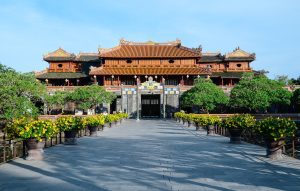
Hué perfectly embodies this cultural dimension. Former imperial capital of Vietnam, the city preserves a remarkable historical heritage between ancient palaces, imperial tombs and pagodas installed along the Perfume River. The atmosphere is calmer, almost nostalgic, offering another side of the country.
Further south, Hoi An is often one of the travellers’ favourite stops.
This old market town has an absolutely unique charm. At nightfall, the colorful lanterns illuminate the historic alleys in a particularly romantic atmosphere. Old houses, small elegant cafes and artisanal workshops create a refined atmosphere that contrasts with the bustle of large Vietnamese cities.
But Hoi An is not limited to its historic center. The surroundings also offer magnificent immersive experiences: bike rides in the middle of rice fields, encounters in fishing villages or discovery of the coastal countryside of central Vietnam.
Da Nang, located nearby, brings a more contemporary touch with its elegant beaches and upscale hotels. This stage can become a particularly pleasant moment of rest before continuing the journey towards the south of Vietnam or towards Siem Reap.
The Vietnam center plays an essential role in the balance of the circuit. It naturally slows down the pace of travel while deeply enriching cultural discovery.
South Vietnam: tropical immersion in the Mekong Delta
South Vietnam unveils a completely different atmosphere, more tropical, warmer and deeply oriented towards the river life.
Ho Chi Minh City immediately impresses with its spectacular dynamism. Modern, energetic and constantly moving, the city reveals a fascinating contemporary Vietnam. Behind the skyscrapers and urban bustle, however, there are many colonial legacies, traditional markets and a particularly rich gastronomic scene.
But it is above all the Mekong Delta that truly transforms the experience.
This immense region crossed by thousands of channels offers an exceptional human immersion. Here, daily life is organized around water. Floating markets, tropical orchards and small villages accessible only by boat reveal a more intimate and authentic Vietnam.
Staying with a local in the Mekong often allows you to experience some of the most memorable moments of your trip. Shared meals, simple exchanges and the warm welcome of Vietnamese families create a rare closeness with the local culture.
This immersion in South Vietnam brings a particularly precious human depth before the last stage of the journey to Cambodia.
Siem Reap and the temples of Angkor: the apotheosis of travel
After crossing the different Vietnamese regions, the arrival in Siem Reap often marks the emotional climax of the trip.
The city has a more peaceful and contemplative atmosphere. The days usually start very early in order to reach the temples of Angkor before sunrise. Then comes this almost unreal moment when the first lights slowly appear behind the mythical towers of Angkor Wat.
Emotion is often immediate.
Discovering Angkor after Vietnam gives a particular resonance to the site. The temples seem to arise in the heart of the jungle in a deeply mystical atmosphere. Each monument tells a different story.
Angkor Wat impresses with its monumental dimensions and the incredible finesse of its sculptures.
The Bayon fascinates with its huge stone faces that seem to have been silently observing visitors for centuries.
Ta Prohm, invaded by the gigantic roots of cheese makers, reveals one of the most spectacular scenery in Southeast Asia.
But beyond their architectural beauty, the temples of Angkor above all provoke an emotion that is difficult to explain. The silence, the light filtering through the trees and the sensation of crossing a place beyond time give this stage an almost spiritual dimension.
It is precisely for this reason that Siem Reap constitutes a perfect conclusion to a trip Vietnam Cambodia: a last deeply striking immersion between heritage, contemplation and wonder.
How many days should you expect to combined Vietnam and Cambodia?
Why we recommend a minimum of 21 days
To fully experience a trip Vietnam and Siem Reap without frustration or excessive fatigue, we recommend a minimum of 21 days. This duration allows to discover the different Vietnamese regions in good conditions while really enjoying the magic of the temples of Angkor.
Vietnam is a long, rich and extremely diverse country, with each region having its own cultural identity, landscape and atmosphere. Reducing the itinerary to two weeks often requires accelerating the pace, multiplying transport and greatly limiting immersive experiences.
Conversely, three weeks offer a much more harmonious approach to travel.
This duration allows:
- to take full advantage of North Vietnam
- to explore the center of the country without rushing
- to experience an authentic immersion in the Mekong Delta
- to devote several days to the temples of Angkor
- to incorporate moments of rest and contemplation
The journey then becomes smoother, more elegant and above all much more emotional.
A slower pace for deeper immersion
One of the great riches of a combined Vietnam and Cambodia lies in human experiences and local atmospheres. But these moments take time.
Having a Vietnamese coffee in an alley in Hanoi at the early morning, riding a bike through the rice fields of Hoi An, sharing a family meal on the Mekong or admiring the sunrise over Angkor Wat are experiences that lose some of their magic when the pace becomes too fast.
With 21 days or more, the journey naturally gains in depth.
Travelers can:
- slow the pace
- avoid days that are too busy
- enjoy more the accommodations
- multiply local discoveries
- to live more exclusive and personalized experiences
This more immersive approach fits perfectly with a high-end trip to Southeast Asia.
Example of a 3-week balanced itinerary
A 21-day Vietnam and Siem Reap tour may include:
- Hanoi and its historic districts
- a cruise in Halong Bay
- Ninh Binh and its spectacular landscapes
- the mountains of northern Vietnam or Sapa
- Hue and the imperial heritage
- Hoi An and the campaigns of central Vietnam
- Ho Chi Minh City
- the Mekong Delta with overnight stays at the locals’
- several days in Siem Reap and at the temples of Angkor
This rhythm helps avoid the sensation of chaining visits without real breathing.
The journey gradually becomes more balanced between:
- cultural immersion
- heritage discoveries
- human experiences
- moments of contemplation
Mistakes to avoid in a route that is too short
The most common mistake is to want to discover all of Vietnam and Angkor in less than two weeks.
Even if it remains technically possible, the trip often becomes tiring:
- numerous domestic flights
- frequent hotel changes
- significant transport times
- visits are too fast
This accumulation strongly reduces the quality of experience.
Vietnam deserves to be discovered with a slower pace in order to fully feel its atmosphere, its landscapes and the warmth of its inhabitants. The same goes for Siem Reap, where the temples of Angkor reveal a completely different atmosphere depending on the hours of the day and the light.
Taking time becomes essential.
A successful Vietnam and Siem Reap trip is not measured by the number of places visited, but by the intensity of emotions experienced throughout the journey.
When is the best time to visit Vietnam and Siem Reap?
The ideal seasons according to the Vietnamese regions
Vietnam has a very extensive geography, which implies different climates depending on the regions and times of the year. It is precisely this climatic diversity that makes the preparation of a trip to Vietnam and Siem Reap particularly important.
In general, the most pleasant period to combine Vietnam and Cambodia is from November to April.
During these months, the weather conditions are often ideal:
- milder temperatures
- more bearable humidity
- clearer skies
- favorable conditions for travel
Northern Vietnam, around Hanoi, Ninh Binh and Halong Bay, then has a cool and pleasant climate. The landscapes become particularly beautiful between September and November when the rice fields take on spectacular golden colors.
In central Vietnam, Hoi An and Hué usually enjoy the best conditions between February and April. The temperatures remain comfortable and sunny days allow you to fully enjoy the historic cities and beaches.
South Vietnam, including Ho Chi Minh City and the Mekong Delta, maintains a warm tropical climate year-round. The dry season, between December and April, however, remains the most pleasant for outdoor activities and river excursions.
This climatic complementarity makes it possible to build a particularly harmonious route throughout the country.
The climate in Siem Reap and around the temples of Angkor
In Cambodia, Siem Reap also experiences two major seasons:
- the dry season
- the rainy season
The best period to visit the temples of Angkor is generally between November and March.
The temperatures are more bearable and the visits become much more comfortable, especially at sunrise when the air is still cool around the temples.
Between December and February, conditions are particularly favorable:
- low humidity
- clear sky
- beautiful lights for the photographs
- more pleasant atmosphere for long explorations of the site
The rainy season, between May and October, however, has a very special charm. The temples are covered with lush vegetation and the landscapes become intensely green. The rains often come in the form of short but powerful downpours at the end of the day.
This period sometimes offers a more intimate experience with fewer visitors, even though temperatures and humidity may become higher.
Our tips for traveling comfortably
To take full advantage of a Vietnam-Cambodia combined, it remains essential to adopt a travel pace adapted to the climate.
In particular, we recommend:
- to prioritize early morning visits
- to avoid the hottest hours for the temples of Angkor
- to provide rest periods in major cities
- to choose comfortable accommodations with swimming pool in certain stages
The tropical climate of Southeast Asia is an integral part of the travel experience. The changing lights, sudden showers and lush vegetation largely contribute to the beauty of the landscapes.
A well-designed itinerary makes it possible to take advantage of the best periods in each region in order to have a more fluid, pleasant and deeply immersive experience.
Choosing the right season does not only transform travel conditions: it also influences atmospheres, landscape colors and the emotional intensity of the experience.
Why choose a tailor-made trip Vietnam Cambodia?
An organization perfectly suited to your pace
A trip to Vietnam and Siem Reap is not just a succession of destinations. The success of the combined rests above all on the balance of the rhythm, the coherence of the stages and the quality of the experiences lived throughout the course.
This is precisely what a tailor-made trip brings.
Each traveler has his own way of discovering Southeast Asia. Some wish to favor human encounters and cultural immersion, while others seek more comfort, gastronomy or contemplative moments facing the iconic landscapes of Vietnam and the temples of Angkor.
A personalized itinerary allows you to adapt:
- the duration of the stops
- the level of comfort
- the frequency of visits
- local experiences
- means of transportation
- moments of rest
This flexibility profoundly transforms the travel experience.
Rather than having a series of overly dense days, the circuit becomes smoother and more natural. Travelers really take the time to discover the place, to feel the local atmosphere and to fully enjoy each stage.
In a Vietnam Cambodia combined, this tailor-made approach is particularly important due to the diversity of regions crossed and the distances between certain stages.
Carefully selected accommodation
The choice of accommodation also plays an essential role in the overall quality of travel.
In Vietnam as in Cambodia, the selected addresses directly influence the immersion and comfort of the experience. A well located hotel in the old quarter of Hanoi, a charming house in the middle of the rice fields of Hoi An or an elegant lodge near the temples of Angkor completely transform the sensations of travel.
At Senteurs du Vietnam, we prefer accommodation:
- authentic
- elegant
- comfortable
- intimate
- integrated into their local environment
The goal is not only to offer a high level of comfort, but above all to create a real emotional continuity throughout the circuit.
Some steps may include:
- charming hotels with colonial heritage
- ecolodges in the heart of nature
- premium cruises in Halong Bay
- immersive guesthouses in the Mekong
- refined establishments near Angkor
These choices give travel a more exclusive and harmonious dimension.
L’expertise locale de notre agence
Building a truly balanced Vietnam-Cambodia route requires in-depth knowledge of the terrain.
Each region has its own particularities:
- climatic periods
- transportation time
- levels of affluence
- local experiences
- qualities of the accommodations
- best visiting periods
Our local expertise allows us to design fluid and coherent routes in order to avoid frequent errors:
- steps too short
- tiring journeys
- excessive accumulation of visits
- lack of free time
- too touristic circuits
On the contrary, we favor a more immersive and qualitative approach to travel.
This goes through:
- authentic local experiences
- local encounters
- discoveries off the beaten track
- personal advice
- attentive support before and during the stay
This vision of travel allows to transform a simple Vietnam Cambodia tour into a deeply human, elegant and memorable experience.
Because beyond the spectacular landscapes and mythical temples, it is often the emotions experienced on site that remain permanently engraved in the memories of travelers.
Conclusion
The trip to Vietnam and Siem Reap is one of those rare itineraries that manage to bring together cultural immersion, diversity of landscapes and permanent emotion in a single experience. Few Southeast Asian combines offer such a harmonious balance of energy, contemplation and human discovery.
Vietnam seduces with its intensity of life, spectacular rice fields, historic cities and the incredible richness of its local culture. Each region reveals a different atmosphere, between ancestral traditions, refined gastronomy and deeply authentic scenes of life.
Then comes Siem Reap, like a more spiritual parenthesis at the heart of the journey. The temples of Angkor provide a monumental and timeless dimension that leaves a lasting impression on travelers. Watching the first light of the sun on Angkor Wat or exploring the mysterious faces of Bayon is an absolutely unforgettable experience.
But the real richness of a Vietnam-Cambodia combined lies above all in the pace of the trip. Taking the time to slow down, observe and fully live each step deeply transforms the experience. That is why we recommend an itinerary of at least 21 days in order to fully enjoy the contrasts, encounters and emotions offered by this exceptional course.
At Senteurs du Vietnam, we design tailor-made trips designed as real immersive experiences. Each itinerary is carefully constructed to create an elegant balance between cultural discoveries, comfort, authenticity and timeless moments.
Want to discover Vietnam and the temples of Angkor?
Our team will assist you in creating a fully customized trip to Vietnam and Siem Reap according to:
- your pace
- your desires
- your travel style
- your desired level of comfort
Contact us to imagine together an authentic and deeply inspiring itinerary through Vietnam and Cambodia.