


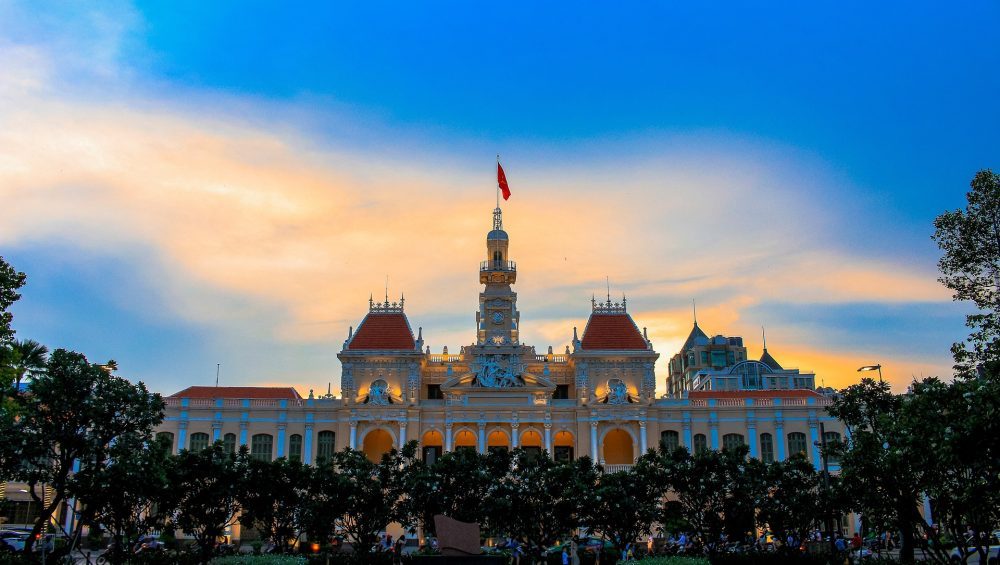
What to Do in Ho Chi Minh City: Our Essential Experiences
Arriving in Ho Chi Minh City can feel slightly overwhelming at first. Hundreds of scooters weave between cars, the aroma of Vietnamese coffee drifts from small neighbourhood cafés, and contemporary skyscrapers rise above buildings that tell the story of another era. Formerly known as Saigon, the city does not try to charm visitors with tranquillity. Its appeal lies in its energy.
So, what should you do in Ho Chi Minh City if you have two or three days? Naturally, there are several major landmarks that should not be missed. But to truly understand Southern Vietnam’s largest metropolis, you also need to explore its markets, taste its food, observe everyday life in its neighbourhoods and experience the city after sunset.
Here is our selection of experiences designed to help you live Saigon rather than simply visit it.
Discover Ho Chi Minh City’s Must-See Landmarks
A first exploration of Ho Chi Minh City can begin in its historic centre. Several major attractions are located relatively close to one another, making it possible to combine sightseeing with leisurely walks without turning the day into a race against the clock.
The Reunification Palace: A Witness to Modern Vietnamese History
Behind its distinctive 1960s architecture, the Reunification Palace holds an important place in Vietnam’s contemporary history. Formerly the presidential palace of South Vietnam, it is closely associated with the events of 30 April 1975 and the end of the Vietnam War.
Inside, visitors can explore reception rooms, offices, official meeting spaces and underground facilities.
Many of the rooms appear almost frozen in time, creating a particularly unusual atmosphere.
We recommend looking beyond the palace as simply a photographic stop.
Understanding its historical role and political context makes the visit considerably more meaningful.
Inside, visitors can explore reception rooms, offices, official meeting spaces and underground facilities. Many of the rooms appear almost frozen in time, creating a particularly unusual atmosphere.
We recommend looking beyond the palace as simply a photographic stop. Understanding its historical role and political context makes the visit considerably more meaningful.
The War Remnants Museum: A Powerful and Emotional Visit
A short distance from the palace, the War Remnants Museum explores the conflicts that deeply affected Vietnam during the 20th century, particularly the Vietnam War.
Photographs, documents and objects make some galleries emotionally challenging. The museum is primarily presented from a Vietnamese perspective, and keeping this context in mind helps visitors approach the displays with greater understanding and perspective.
It is certainly not the lightest experience during a stay in Saigon, but it provides valuable insight into historical wounds whose consequences continued long after the fighting ended.
We recommend allowing sufficient time for the visit and avoiding the temptation to immediately follow it with several other intensive historical attractions.
Notre-Dame Cathedral and the Central Post Office: Historic Saigon
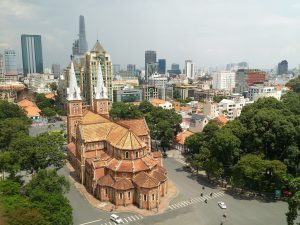 The city centre then reveals a very different side of Ho Chi Minh City. Around the Notre-Dame Cathedral of Saigon and the Central Post Office, architectural traces from different periods stand beside cafés, boutiques and modern buildings.
The Central Post Office is well worth entering to appreciate its spacious interior and architectural details. Nearby, Notre-Dame Cathedral remains one of the city’s best-known historic landmarks, although its appearance may be affected by ongoing restoration work.
Rather than moving quickly from one monument to another, we prefer exploring this district on foot. Walking allows you to fully appreciate one of Ho Chi Minh City’s most fascinating characteristics: the constant dialogue between historic Saigon and a modern metropolis that continues to reinvent itself.
Explore Chợ Lớn: Another Side of Saigon
To discover Ho Chi Minh City beyond the central districts, head towards Chợ Lớn, the large area historically associated with the city’s Chinese community.
Here, the experience is as much about atmosphere as monuments. Shops spill out onto busy streets.
Incense fills the air around temples. Local markets reflect the commercial heritage that has shaped the district for generations.
Places of worship such as traditional Chinese temples introduce visitors to different architectural styles, religious practices and atmospheres from those encountered earlier in central Saigon.
We particularly enjoy Chợ Lớn because it cannot be properly experienced by simply taking photographs. You need to walk. Observe daily life. Allow yourself to wander. And leave room for the unexpected.
This district reveals a more complex side of Saigon, shaped by trade, migration and the different communities that have contributed to its history.
Taste Ho Chi Minh City
You can visit a palace to understand Saigon’s history. To understand everyday Saigon, however, you also need to sit down and eat.
Food is one of the essential experiences in Ho Chi Minh City. Sometimes, a few plastic stools and an open kitchen in a narrow street are enough to create one of the most memorable meals of your journey. Elsewhere, a new generation of chefs is reinterpreting traditional Vietnamese flavours in elegant contemporary restaurants.
We enjoy alternating between these two worlds. It perfectly reflects Ho Chi Minh City itself, where tradition and modernity constantly overlap.
Take time to discover the city’s coffee culture as well. Served hot or iced, sometimes sweetened with condensed milk, Vietnamese coffee provides the perfect excuse to stop, sit down and watch the rhythm of the city.
In Saigon, eating does not interrupt sightseeing — it is part of the experience.
What to Do in Ho Chi Minh City at Night
As the heat begins to ease in the evening, Saigon reveals another personality. Neon lights appear.
Terraces become busier. And the streets maintain their remarkable energy late into the night.
A simple evening walk through the city centre already gives you a sense of this atmosphere. After a Vietnamese dinner, you might head towards the Saigon River or enjoy a rooftop bar overlooking the skyline. The contrast between illuminated skyscrapers and the constant activity at street level perfectly captures the vibrant personality of Ho Chi Minh City.
For travellers looking for a much livelier nightlife scene, Bùi Viện Street attracts both international visitors and local night owls. Its energy can certainly be impressive, but it represents only one side of Saigon after dark. We generally prefer combining a local restaurant, an evening stroll and a panoramic viewpoint to experience a more complete picture of the city at night.
What Can You Visit around Ho Chi Minh City?
Ho Chi Minh City is also an excellent gateway to Southern Vietnam. If your itinerary allows a few additional days, two experiences in particular provide an opportunity to leave the urban environment and explore very different aspects of the country.
The Củ Chi Tunnels: Understanding the History
 Located outside Ho Chi Minh City, the Củ Chi Tunnels provide insight into another aspect of the Vietnam War. This extensive underground network was used by Vietnamese fighters for movement, shelter and a variety of activities during the conflict.
Visiting the site helps you understand the extremely difficult conditions in which these tunnels were used. Some sections have been adapted so visitors can enter them and physically experience the confined space. However, there is no obligation to crawl through the tunnels if you find enclosed environments uncomfortable.
Củ Chi complements the historical sites located in central Saigon and adds another dimension to understanding Vietnam’s recent past.
The Mekong Delta: A Complete Change of Atmosphere
Just a few hours from Ho Chi Minh City, the urban landscape gradually disappears and is replaced by waterways, vegetation and rural life.
The Mekong Delta, however, deserves more than a rushed day trip. Whenever the itinerary allows, we prefer to spend at least one night in the region. Once day visitors leave, the atmosphere changes.
The pace becomes gentler, and the experience feels significantly more authentic and relaxed.
For us, the Mekong is therefore not simply an answer to the question, “What can I visit from Ho Chi Minh City?” It can become an important destination in its own right, offering a striking contrast with the energy of Saigon.
How Many Days Should You Spend in Ho Chi Minh City?
For a first visit, two days in Ho Chi Minh City provide a good introduction. This gives you enough time to discover the main historical landmarks while still allowing space for Chợ Lớn, local cuisine and the city’s evening atmosphere.
A simple itinerary could be:
- Day 1: Reunification Palace, War Remnants Museum, Central Post Office, historic centre and an evening in Saigon.
- Day 2: Chợ Lớn, temples, markets, local food and exploration of different neighbourhoods.
- Additional day: excursion to Củ Chi or departure towards the Mekong Delta.
If you enjoy large cities, a third full day in Saigon also allows you to slow down and explore beyond the classic tourist routes. The most important thing is not to fill every hour. Part of Ho Chi Minh City’s charm reveals itself precisely when you give yourself time to stop and simply watch the city move around you.
Ho Chi Minh City: A Place to Experience, Not Just Visit
So, what should you do in Ho Chi Minh City? Visit its monuments, certainly. But above all, embrace its rhythm.
Saigon can be discovered inside a palace filled with history just as much as over a glass of iced Vietnamese coffee. It can be found in the incense-filled temples of Chợ Lớn and beneath the lights of modern skyscrapers.
This constant energy makes Ho Chi Minh City one of the most captivating stops on a journey through Southern Vietnam.
At Senteurs du Vietnam, we include Ho Chi Minh City in our tailor-made itineraries by selecting experiences according to your pace, interests and expectations. Saigon can then become the starting point for a deeper exploration of Southern Vietnam — towards Củ Chi, the Mekong Delta or the next stage of your journey through the country.