

In the misty mountains of North Vietnam, time seems suspended. Between the rice terraces of Sapa, the isolated valleys of Ha Giang and the colorful markets of Bac Ha, still live today peoples proud of their traditions: the Hmong and the Red Dao.
These ethnic minorities of Vietnam, rich in a thousand-year history, perpetuate know-how, beliefs and a unique lifestyle in the world.
Their universe fascinates travelers: indigo embroidered costumes, bright red headdresses, lively markets where fruits, fabrics and smiles are exchanged. Beyond their picturesque appearance, these peoples embody the deep soul of the country – that of an authentic Vietnam, rooted in its roots and open to sharing.
At Senteurs du Vietnam, we are committed to discovering these cultures with respect and sensitivity. We believe that a cultural trip to Vietnam only makes sense if it creates a sincere human bond between visitors and locals.
In this article, we invite you to meet the Hmong and the Red Dao, to understand their traditions, their know-how and the simple beauty of their daily life in the heart of the mountains.
The ethnic minorities of Vietnam: a living heritage
Vietnam is a land of exceptional cultural diversity. The country has 54 recognized ethnic groups, each with unique traditions, languages and beliefs.
This human mosaic is a true national treasure, particularly concentrated in the mountainous northern provinces such as Lao Cai, Ha Giang, Lai Chau and Cao Bang.
These communities live in harmony with nature, following the rhythm of the seasons, rice cultivation and agricultural festivals.
Their daily life is marked by solidarity, simplicity, and respect for the elders.
Vietnamese customs – dances, ceremonies, weddings, markets – demonstrate a deep attachment to the land and ancestors.
Among these peoples, the Hmong and the Red Dao occupy a special place: guardians of mountains and centuries-old traditions, they embody the spiritual and artisanal wealth of Vietnam.
The Hmong: guardians of the Northern mountains
Origins and lifestyle
 The Hmong, who came from southern China several centuries ago, settled in the mountains of North Vietnam, around Sapa, Mu Cang Chai and Ha Giang.
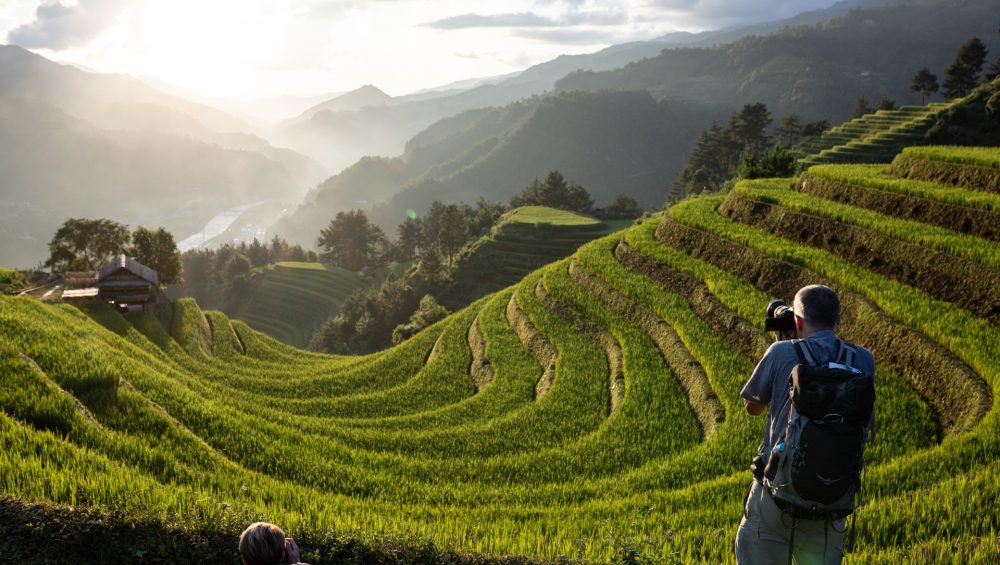
They live in hillside villages, growing rice and corn on spectacular terraces.
Their society, structured around the family and the clan, is guided by animistic beliefs.
The spirits of nature, the ancestors and the invisible forces punctuate every stage of life.
This deep spiritual connection with the land explains their respect for nature and their ancestral agricultural know-how.
Traditions and crafts
The Hmong craftsmanship is of a rare finesse. Women are known for their mastery of batik, indigo dye and symbolic embroidery.
Every garment is a work of art: the Black Hmong wear sober clothes tinged with deep blue, while the Flower Hmong wear bright costumes adorned with beads, ribbons and colorful geometric patterns.
These creations reflect the identity of each sub-group and the social status of women.
Buying a fabric or an embroidery piece directly from a craftswoman means supporting the transmission of a living heritage and preserving unique know-how.
Villages and meetings
The Hmong villages of Cat Cat, Lao Chai, Ta Van or Ban Pho around Sapa are all places to live and share.
We meet laughing children, golden rice fields and wooden houses smoking in the early morning.
The markets of Bac Ha or Can Cau are the weekly meetings where the Hmong exchange products, livestock, fabrics and news from the valley – a vibrant and colorful moment.
Advice from our Senteurs du Vietnam experts:
For a more authentic experience, opt for less frequented villages and let yourself be guided by a local English-speaking guide. You will discover a world where every gesture and every smile have meaning.
The Red Dao: elegance, know-how and traditions
A deeply spiritual culture
The Red Dao, or Red Yao, live in the surrounding mountains of Sapa, Ta Phin and Nam Cang.
Their culture is based on ancestor worship and animistic spirituality.
Each house houses a family altar where offerings are burned. The ceremonies punctuate the life of the village: births, harvests, funerals, New Year celebrations.
This spiritual life is combined with a deep sense of community.
The Red Dao give an important place to women, guardians of traditions and crafts.
The traditional costume of the Red Dao
Impossible to confuse a Red Dao: their costumes are among the most spectacular in Southeast Asia.
The women wear a bright red headdress, carefully folded and embroidered, and a black tunic adorned with red and white patterns symbolizing luck and strength.
The meticulous embroideries, often sewn for months, testify to an ancestral know-how passed from mother to daughter.
Each costume tells a story: that of the family, the clan and the surrounding mountains.
The Red Dao villages around Sapa
Ta Phin village is the vibrant heart of the Red Dao culture.
Visitors discover a simple and harmonious life, punctuated by agricultural work and crafts.
The local specialty is the bath with medicinal herbs, composed of more than twenty plants picked from the forest.
This ancestral ritual soothes pain, purifies the mind and invites relaxation.
Advice from our Senteurs du Vietnam experts:
Spend a night in a homestay at Ta Phin to share a meal, a story, a smile. You will experience an authentic cultural immersion, a rare and sincere moment of exchange.
Live an authentic encounter in the mountains of the North
A trip to North Vietnam is not just an itinerary through landscapes: it is above all a human encounter.
In the Hmong and Red Dao villages, each visit becomes an inner adventure.
Sleeping with the locals, participating in meal preparation, learning a few words in the local language is discovering the true meaning of travel: that of sharing and respect.
The inhabitants open their house and their heart, offering travelers a welcome marked by simplicity and generosity.
The ethnic markets of Bac Ha, Can Cau or Muong Khuong are also highlights: explosion of colors, scents and life.
The exchanges are sincere, and one feels the cultural pride of these peoples who have been perpetuating their customs for centuries.
Responsible and respectful tourism
Discovering the ethnic minorities of Vietnam also means becoming aware of their fragility.
Modernization, mass tourism and globalization sometimes threaten the balance of these communities.
At Senteurs du Vietnam, we advocate responsible tourism:
- Respect des coutumes et de la vie privée des habitants,
- Purchase of crafts directly from families,
- Accommodation in private homes or in local structures,
- Collaboration with English-speaking guides from the villages themselves.
These simple choices contribute to preserving traditions and making travel a solidarity-based and sustainable act.
Our commitment: support community projects, promote the transmission of know-how and encourage a development respectful of Vietnamese culture and nature.
Conclusion: The red Hmong and Dao, souls of North Vietnam
The Hmong and the Red Dao are much more than picturesque figures of North Vietnam.
They are the guardians of a living memory, an ancestral wisdom and a simple beauty, deeply human.
Meeting them is discovering an authentic Vietnam, made of misty mountains, children’s laughter and preserved traditions.
It is also an invitation to travel differently – with an open heart and respect for the common thread.
Create your tailor-made trip with Senteurs du Vietnam
At Senteurs du Vietnam, we create cultural and immersive trips that give real meaning to the word encounter.
Our tailor-made tours take you to the Hmong and Red Dao villages, to discover an intimate and bright Vietnam, accompanied by passionate local guides.
Contact us today to build together your authentic and responsible trip to Vietnam.