

Every year, when the streets are adorned with red and gold and families gather around ancestral altars, the Vietnamese New Year deeply transforms the country. Called the Vietnamese Tet, this event is much more than a simple change of date: it embodies the soul, values and collective memory of Vietnam.
During this period, time seems to slow down. Houses are cleaned from top to bottom, flower markets are full of life, kitchens come alive with recipes passed down for generations. Tet marks a new beginning, an essential, emotional and deeply symbolic moment.
For travelers, discovering the Vietnam Lunar New Year is an absolutely unique experience. But it also raises many questions: what are the traditions? which dates? can one travel during Tet? what should one know to avoid awkwardness?
In this article, we offer you a complete and reliable guide to understand the Vietnamese Tet, its rites, symbols, gastronomy and the keys to live it fully, as a respectful traveler.
What is the Vietnamese New Year (Tet)?
The Vietnamese New Year, or Vietnamese Tet (Tết Nguyên Đán), corresponds to the first day of the lunar year. It symbolizes rebirth, renewal and harmony between man, nature and the spiritual world.
Unlike the Western New Year, celebrated in a single night, the festival of Tet is part of the duration. The preparations begin several weeks before and the celebrations continue well after the official days. Every gesture made during this period is meaningful, as it is supposed to influence the coming year.
Rooted in Vietnamese culture, the Lunar New Year Vietnam highlights:
- respect of the ancestors,
- the importance of family,
- the quest for balance and prosperity.
Understanding what Tet means in Vietnam is to access a much more intimate reading of the country.
What is the date of Tet and how is it calculated?
The date of Tet varies each year, as it depends on the Vietnamese lunar calendar. The Vietnamese Tet takes place during the first new moon of the lunar year, generally
between the end of January and mid-February.
The Vietnamese lunar calendar
This ancestral calendar follows the cycles of the moon and nature. It structures not only traditional festivals, but also many spiritual and agricultural rites. The Vietnamese New Year is thus closely linked to the notion of cosmic balance and natural renewal.
Tet dates (benchmarks)
- 2025: end of January
- 2026: mid-February
- 2027: early February
It is important to note that Tet is not limited to a single day:
- the preparations begin 2 to 3 weeks before,
- the official days last 3 to 5 days,
- the festive atmosphere often lasts more than a week.
Why is Tet the most important festival in Vietnam?

The Vietnamese Tet is the pillar of the social and spiritual life of the country. It symbolizes a new beginning, an opportunity to leave behind the difficulties of the past year and to welcome the news with positive intentions.
During the Vietnamese New Year, everything is oriented towards:
- luck,
- prosperity,
- family harmony.
The first words, the first visits and the first gestures of the year are considered decisive for the months to come.
The family is at the center of the Tet festival. Millions of Vietnamese return to their native region to gather, honor their ancestors and share precious moments. This family and spiritual dimension makes the Tet a deeply identity event.
The great traditions of the Vietnamese Tet
The traditions of Tet give full meaning to the Vietnamese New Year. They mix spiritual rites, family customs and benevolent superstitions.
The cleaning and preparation of houses
Before the Vietnamese Tet, houses are thoroughly cleaned to remove bad energies from the past year. Once the Tet begins, it is traditionally discouraged to sweep or throw waste, so as not to scare off luck.
Ancestor worship
Ancestor worship is central during the festival of Tet. The family altars are decorated, filled with flowers, fruits, incense and traditional dishes. Ancestors are invited to celebrate the New Year with their descendants and protect them for the coming year.
The visits and rules to follow
Visits follow a specific order, starting with close family. Positive words, respect and restraint are essential. These rites of the Vietnamese New Year structure social relations and strengthen family ties.
The essential symbols of Tet
The Vietnamese Tet is a festival rich in symbols, visible everywhere in the country.
The flowers of Tet
 The flowers of Tet
- The peach blossom, to the north, symbolizes vitality and protection.
- The yellow apricot flower, in the South, represents prosperity and wealth.
The red envelopes (li xi)
The red envelopes, or li xi, contain lucky money offered to children and elders. The gesture is more important than the amount: it conveys wishes of happiness and success.
The colors and decorations
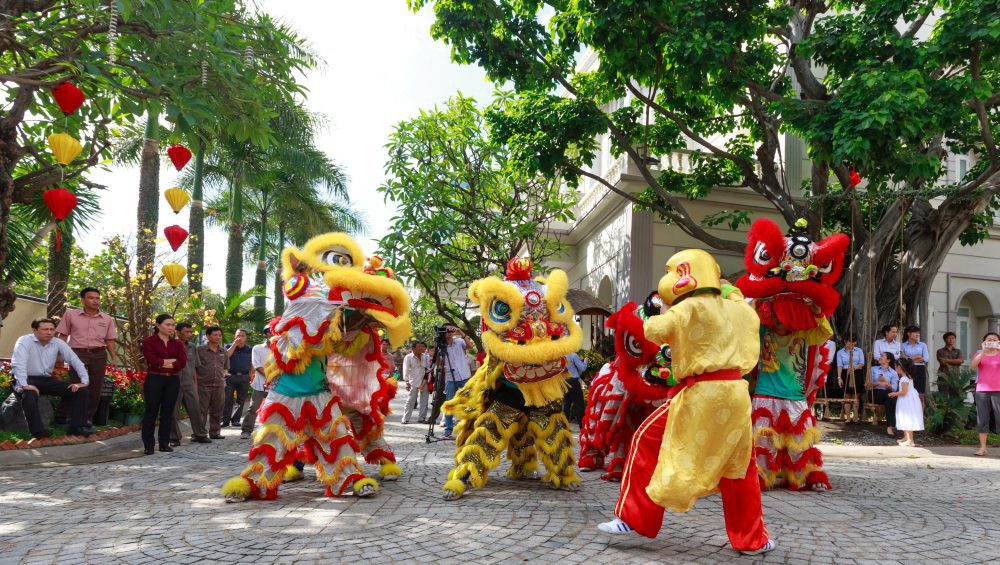
Red and gold dominate during the Vietnam Lunar New Year. Calligraphies, lanterns and astrological symbols recall the wishes of luck, longevity and success.
What do we eat during the Vietnamese Tet?
Gastronomy is inseparable from the Tet festival. Each dish carries meaning.
The traditional dishes of Vietnamese Tet
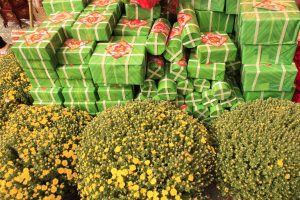
- Bánh chung (North) and bánh tét (South), symbols of the earth and abundance
- Caramelized pork with eggs, family and generous dish
- Pickled vegetables, for balance
- Candied fruits (mut), offered to visitors
The symbolism of food
The traditional dishes of Vietnamese Tet evoke family unity, prosperity and harmony. Sharing these meals is a highlight of transmission and conviviality.
Is Tet celebrated in the same way everywhere in Vietnam?
The Vietnamese Tet varies according to the regions:
- North: more solemn celebration, centered on the rites and the bánh chung
- Center: sober traditions, strong spiritual dimension
- South: more festive atmosphere, apricot blossom and bánh tét
These differences illustrate the richness of Vietnamese culture.
Conclusion – Tet, the soul of Vietnam
The Vietnamese New Year is much more than a celebration: it is an immersion in the history, spirituality and values of Vietnam. To live Vietnamese Tet is to understand the country in its most authentic and essential aspects.