Ben Tre: authentic province of the Mekong, unforgettable trip

Ben Tre, the authentic soul of the Mekong delta

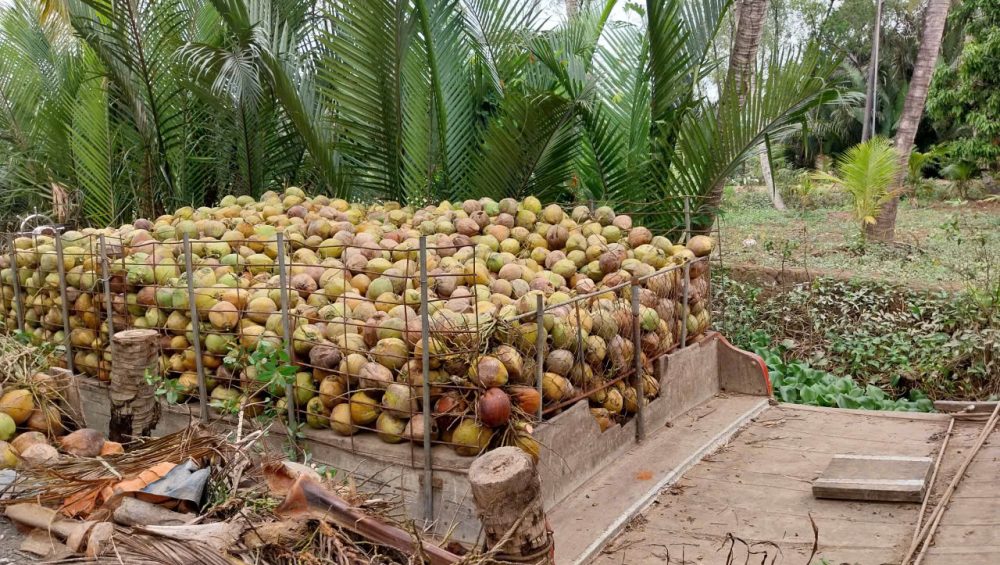
Only a few hours away from the excitement of Ho Chi Minh City, the scenery changes completely. The buildings disappear, the horns turn off, and give way to a serene world, shaped by water, palm trees and long time. Welcome to the province of Ben Tre, one of the most authentic and preserved regions of southern Vietnam.

Here, the Mekong is not visited: it is lived. The province of Ben Tre embodies a rural, deep and emotional Vietnam, where every encounter makes sense and each moment naturally slows down the pace of the journey. Vietnamese coconut capital, Ben Tre is a generous land, shaped by the arroyos, lush orchards and a population of remarkable benevolence.

At Senteurs du Vietnam, we particularly like to take our travelers to Ben Tre, because this province offers exactly what lovers of off-the-beaten-path travel are looking for: real immersion in the local life of the Mekong, simple but unforgettable experiences, and respectful rural tourism Vietnam, far from mass tourism.

Read More “Ben Tre: authentic province of the Mekong, unforgettable trip”
Vietnamese New Year: the Tet, a magical and unique festival

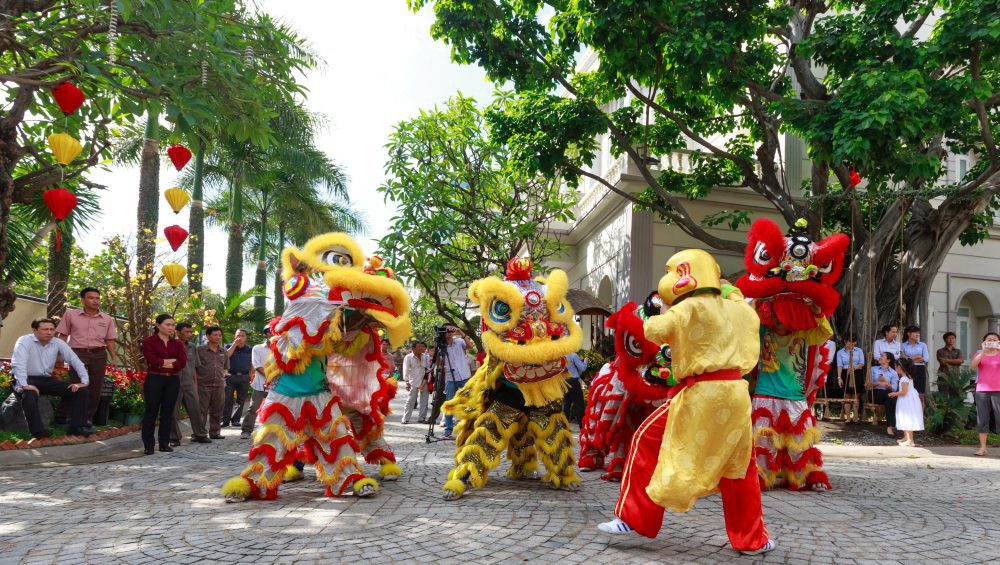
Every year, when the streets are adorned with red and gold and families gather around ancestral altars, the Vietnamese New Year deeply transforms the country. Called the Vietnamese Tet, this event is much more than a simple change of date: it embodies the soul, values and collective memory of Vietnam.

During this period, time seems to slow down. Houses are cleaned from top to bottom, flower markets are full of life, kitchens come alive with recipes passed down for generations. Tet marks a new beginning, an essential, emotional and deeply symbolic moment.

For travelers, discovering the Vietnam Lunar New Year is an absolutely unique experience. But it also raises many questions: what are the traditions? which dates? can one travel during Tet? what should one know to avoid awkwardness?

In this article, we offer you a complete and reliable guide to understand the Vietnamese Tet, its rites, symbols, gastronomy and the keys to live it fully, as a respectful traveler.

What is the Vietnamese New Year (Tet)?

The Vietnamese New Year, or Vietnamese Tet (Tết Nguyên Đán), corresponds to the first day of the lunar year. It symbolizes rebirth, renewal and harmony between man, nature and the spiritual world.

Unlike the Western New Year, celebrated in a single night, the festival of Tet is part of the duration. The preparations begin several weeks before and the celebrations continue well after the official days. Every gesture made during this period is meaningful, as it is supposed to influence the coming year.

Rooted in Vietnamese culture, the Lunar New Year Vietnam highlights:

  • respect of the ancestors,
  • the importance of family,
  • the quest for balance and prosperity.

Understanding what Tet means in Vietnam is to access a much more intimate reading of the country.

Read More “Vietnamese New Year: the Tet, a magical and unique festival”

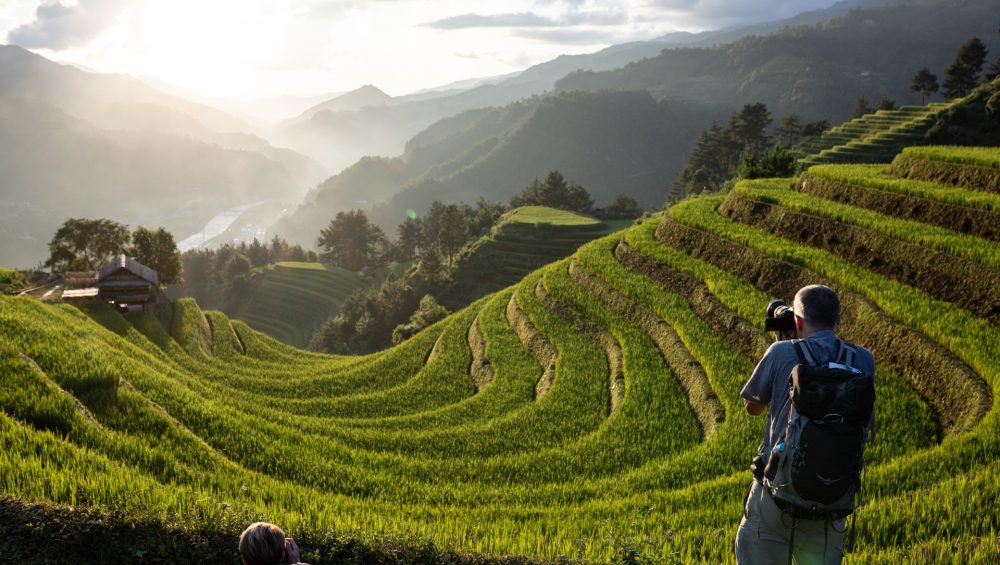
Rizières en terrasse

Meeting the Hmong and Red Dao minorities of North Vietnam

In the misty mountains of North Vietnam, time seems suspended. Between the rice terraces of Sapa, the isolated valleys of Ha Giang and the colorful markets of Bac Ha, still live today peoples proud of their traditions: the Hmong and the Red Dao.
These ethnic minorities of Vietnam, rich in a thousand-year history, perpetuate know-how, beliefs and a unique lifestyle in the world.

Their universe fascinates travelers: indigo embroidered costumes, bright red headdresses, lively markets where fruits, fabrics and smiles are exchanged. Beyond their picturesque appearance, these peoples embody the deep soul of the country – that of an authentic Vietnam, rooted in its roots and open to sharing.

At Senteurs du Vietnam, we are committed to discovering these cultures with respect and sensitivity. We believe that a cultural trip to Vietnam only makes sense if it creates a sincere human bond between visitors and locals.
In this article, we invite you to meet the Hmong and the Red Dao, to understand their traditions, their know-how and the simple beauty of their daily life in the heart of the mountains. Read More “Meeting the Hmong and Red Dao minorities of North Vietnam”

Village de pêcheur dans la baie d'Halong

Discovery of Halong Bay

Halong Bay is the first symbol of Vietnam.

This place, considered a natural wonder, has nearly 1600 islands and limestone islets covered with dense vegetation and populated by birds that form a unique landscape in the world. For a long time this area was full of pirates hiding among the limestones and in secret bays. Now the pirates have been replaced by the cruise ships from which you will discover the beauty of these formations. Read More “Discovery of Halong Bay”

On the kings’ tracks

In the heart of Hue, the Nguyen Dynasty has been ruling the city and the surroundings for years during the 19th Century. Therefore, during their successive reign, the different emperors have been developing the city and they have been building many monuments in its surroundings.

For instance, the first emperor of the Dynasty, Gia Long, lead the project of the An Cuu Canal (known as Phu Cam canal), linking the Perfume River to Cau Hai Lagoon in order to ease the journey to the south and to enhance the lands south of the city. This is one of the many constructions the different emperors of the Nguyen Dynasty have made during their reign and all of them have marked the city in their own ways according to their own architectural taste.

Read More “On the kings’ tracks”

Phong Nha Ke Bang – Paradise Cave and Dark Cave

In Central Vietnam, in Phong Nha Ke Bang National Park, the nature has been working hard to design a unique treasure. Under the actions of the elements, water mainly; nature has eroded these places, giving birth to some complex cave networks.

For a few years, this area has been recognized by Vietnamese government and by the UNESCO as an exceptional natural patrimony which reveals itself to the world very slowly thanks to the work of speleologists and adventurers who struggle to discover these underground treasures. Therefore, each year, this part of Vietnam appears step by step to the world.

Now, the whole park offers to rediscover a large range of forgotten sensations in an impressive environment.

Read More “Phong Nha Ke Bang – Paradise Cave and Dark Cave”

Lifetime of an incense stick

Every traveler, even you, has noticed this small fragrant stick, if not by directly seeing it, your nose will have picked up its light smell when walking in some houses, temples, pagodas and other monuments. As it seems it’s such a small item, but its lifetime is still very complex and it holds a very important position in Vietnamese society.

First of all, let’s remember what incense is; a thin stick of bamboo covered with a resin of Sandalwood which is finally used during many ceremonies and rituals of the daily life of Vietnamese people. Therefore, here is its life and the story of its production in Hue.

Read More “Lifetime of an incense stick”

A Stroll in Hue

Hue, former capital of Vietnam and center for the Nguyễn Dynasty, first developed North of the Perfume River, around Kim Long and Thien Mu Pagoda. Then, it moved around the Royal Palace and the fortified city around the waterways and the canals.

During the Indochina Era, French settled on the southern bank of the river and many monuments, often ignored by the tourists, provide evidences of their former presence. Today, most of those monuments are nationalized and occupied by various city departments.

Read More “A Stroll in Hue”